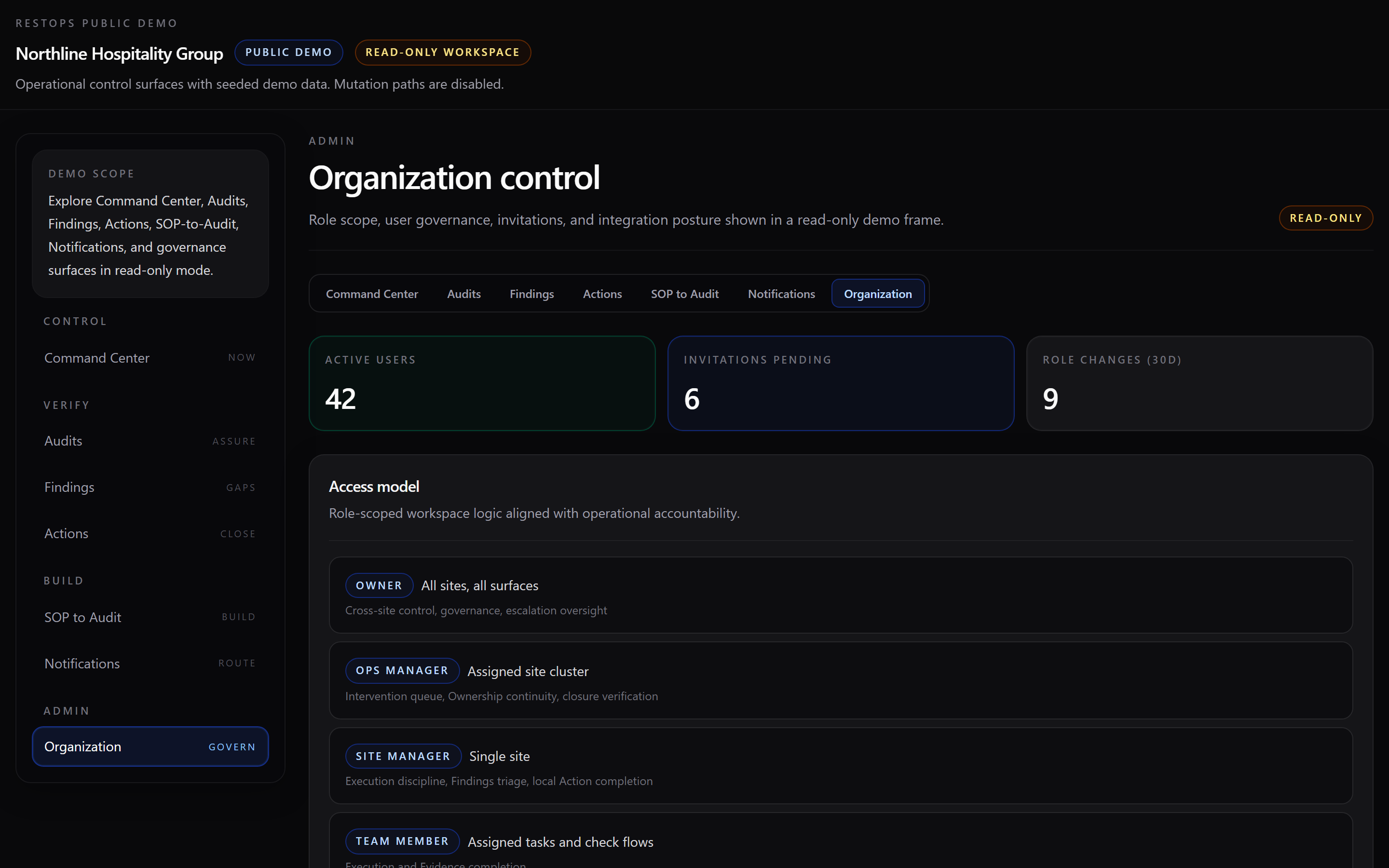
Product Surfaces
Six real product surfaces from the RestOps demo workspace.
Every screen below is captured from the live seeded demo — not a prototype, not a mockup.
Control
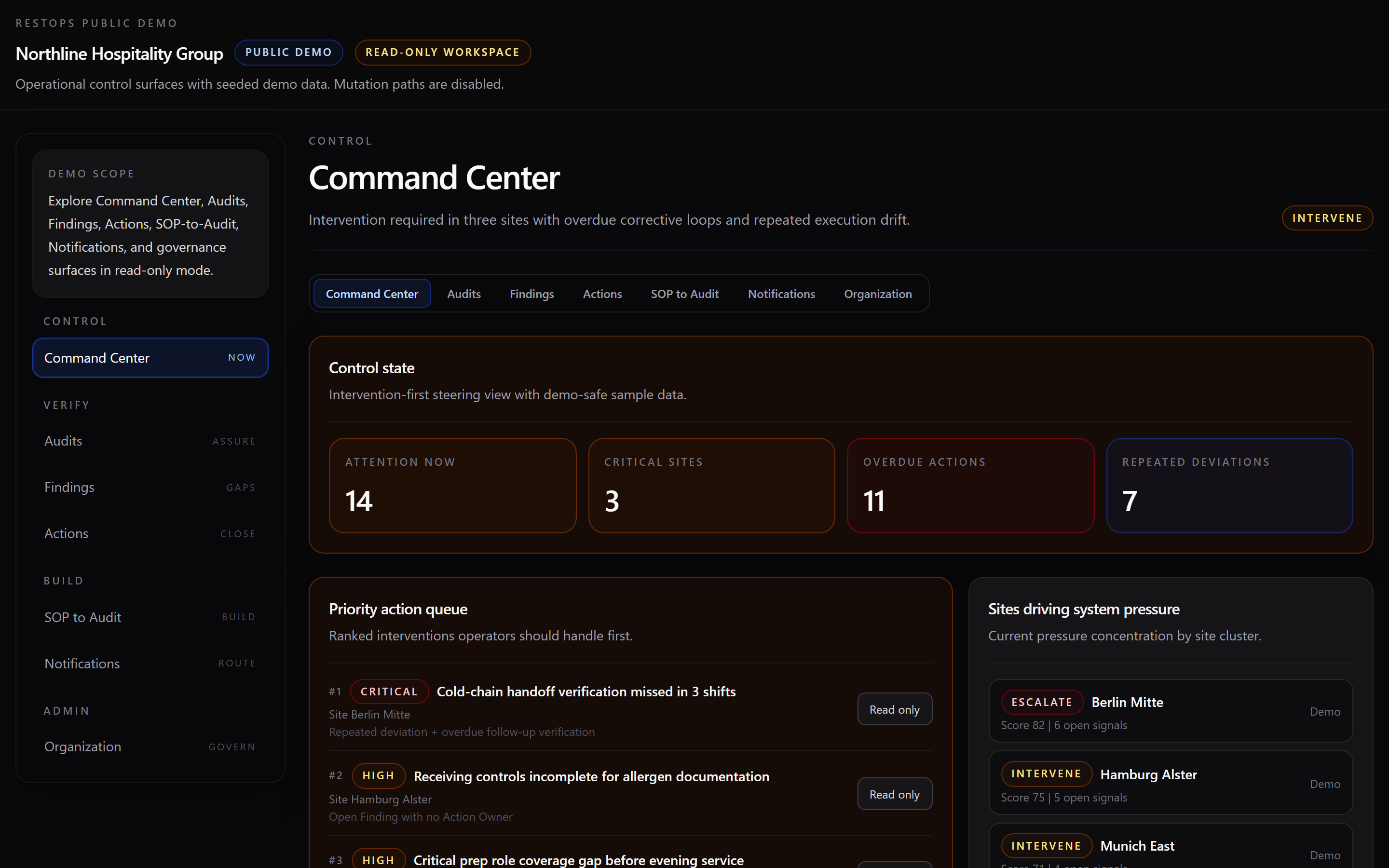
Command Center
Intervention-first Steering surface with ranked action queue, Site pressure visibility, and operational analysis. The main control surface for any Ops Lead or Owner.
- Steering state and pressure snapshot across all Sites
- Priority intervention queue ordered by urgency
- Sites driving system pressure with corrective exposure
Verify
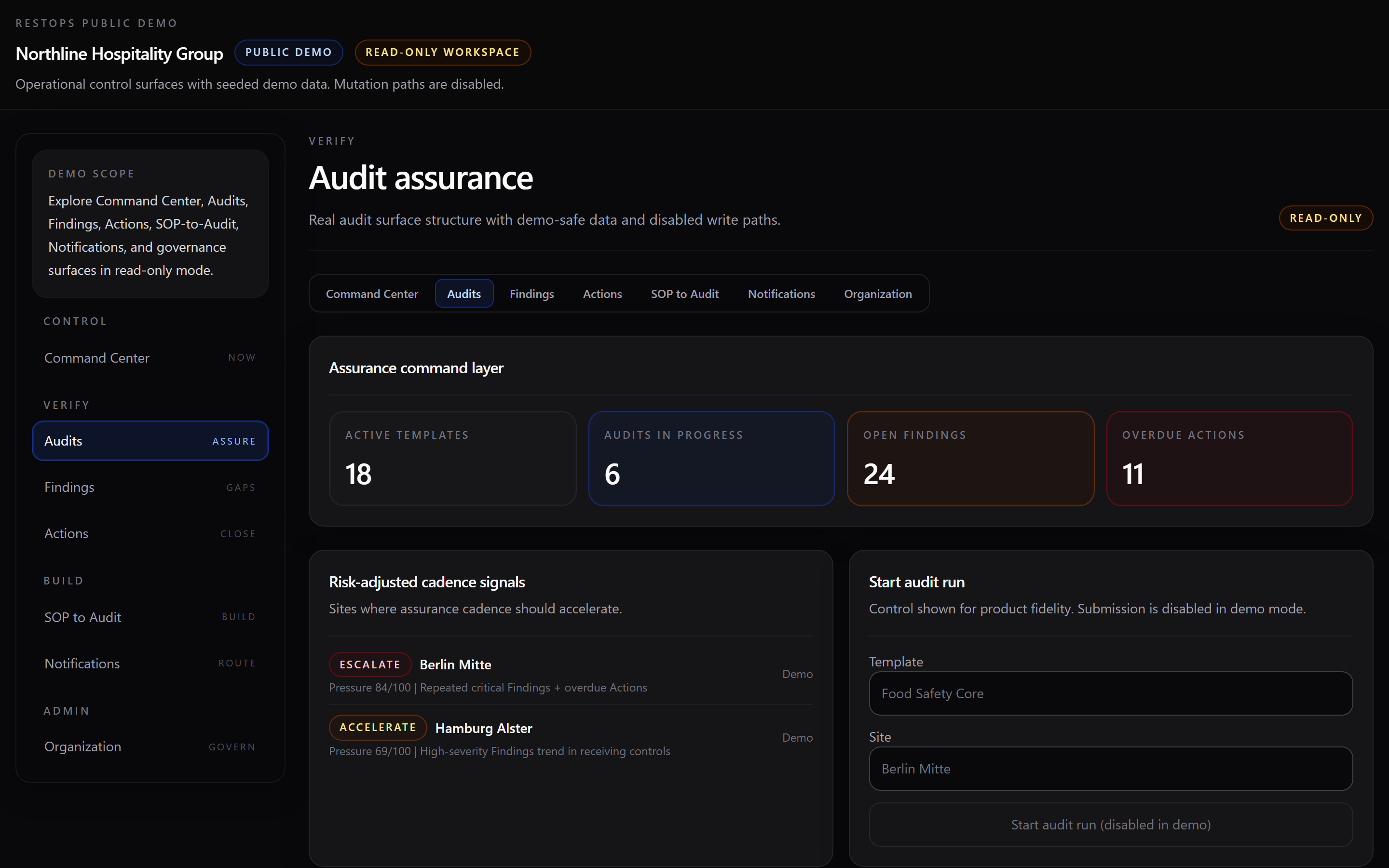
Audit Assurance
Audit command layer with cadence pressure, open Findings, and overdue Actions surfaced for operational follow-up. Tracks assurance across all Sites in one view.
- Audit cadence and in-progress run state
- Risk-adjusted assurance signals per Site
- Critical Finding location visibility
Triage
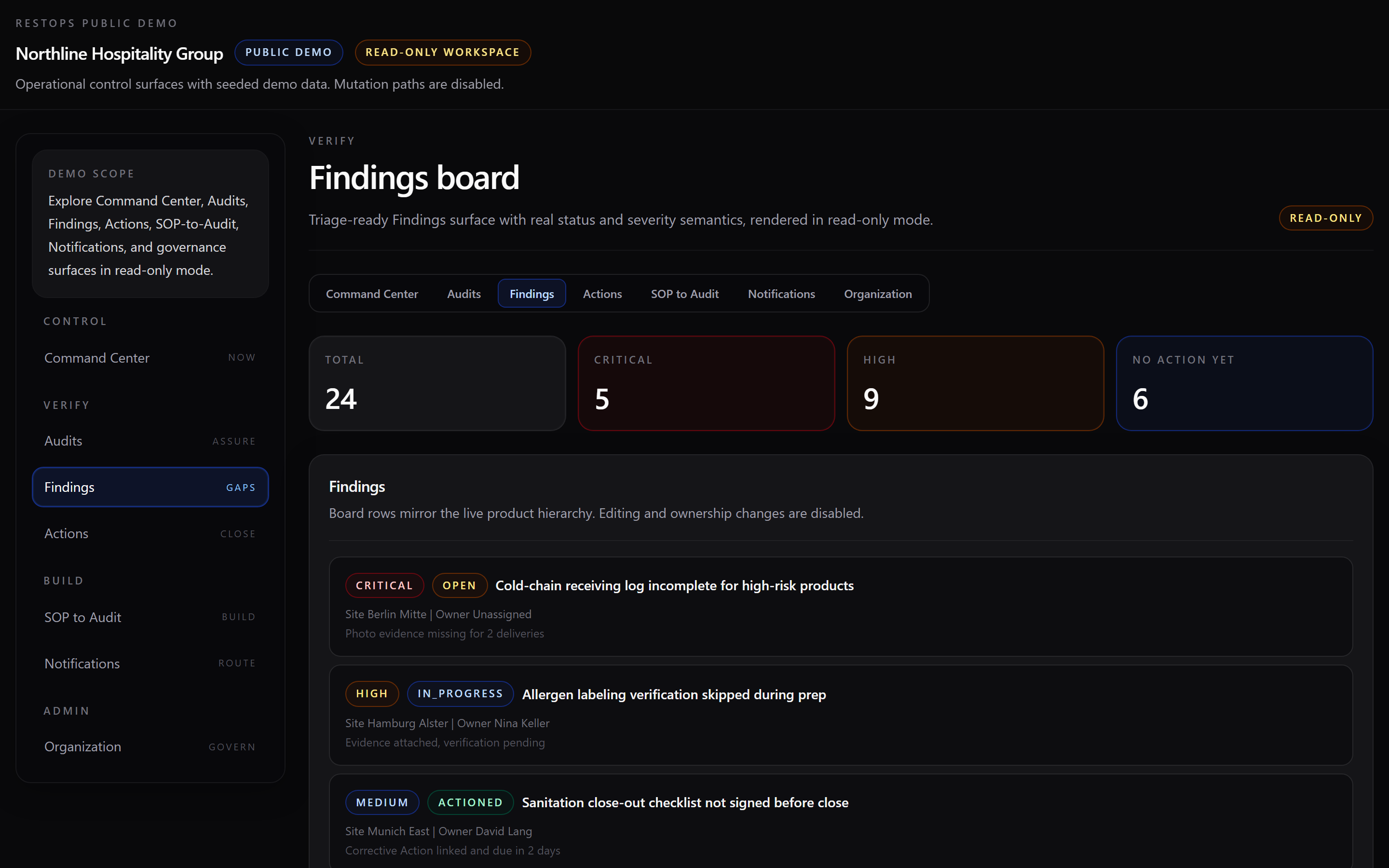
Findings
Every deviation captured in an Audit becomes a structured Finding with severity, Ownership, and an explicit treatment path. Not a log — a triage surface.
- Finding list with severity, status, and Site context
- Treatment path selection: resolve, triage, or formal Corrective Action
- Ownership and due-state discipline at Finding level
Execute
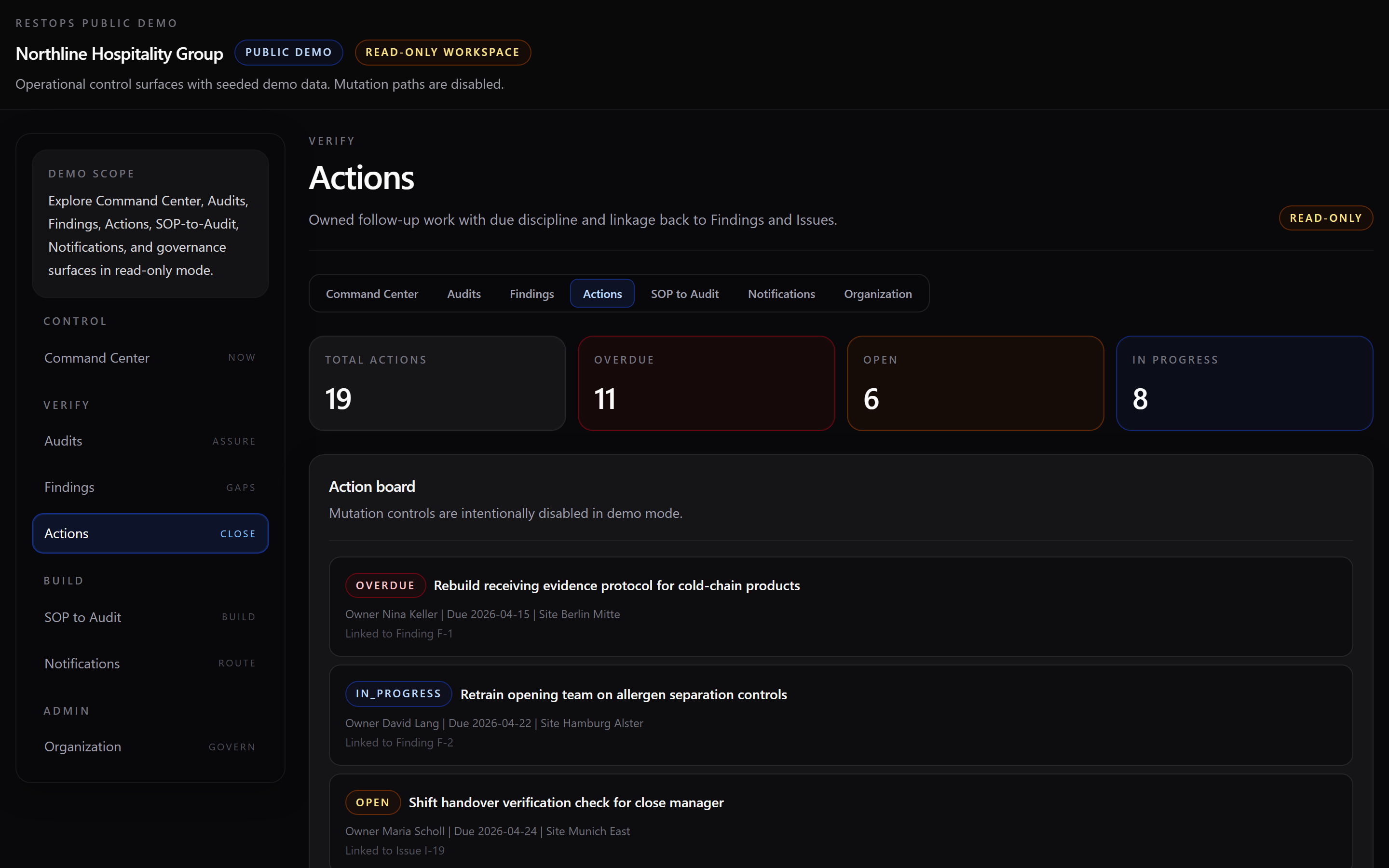
Corrective Actions
Corrective Actions are owned, tracked, and due-dated. Overdue states surface immediately in the Steering view. Completion requires verified Evidence — not just a status change.
- Action list with owner, due date, and overdue state
- Linked to the Finding or Issue that generated them
- Evidence and verification required before close
Route
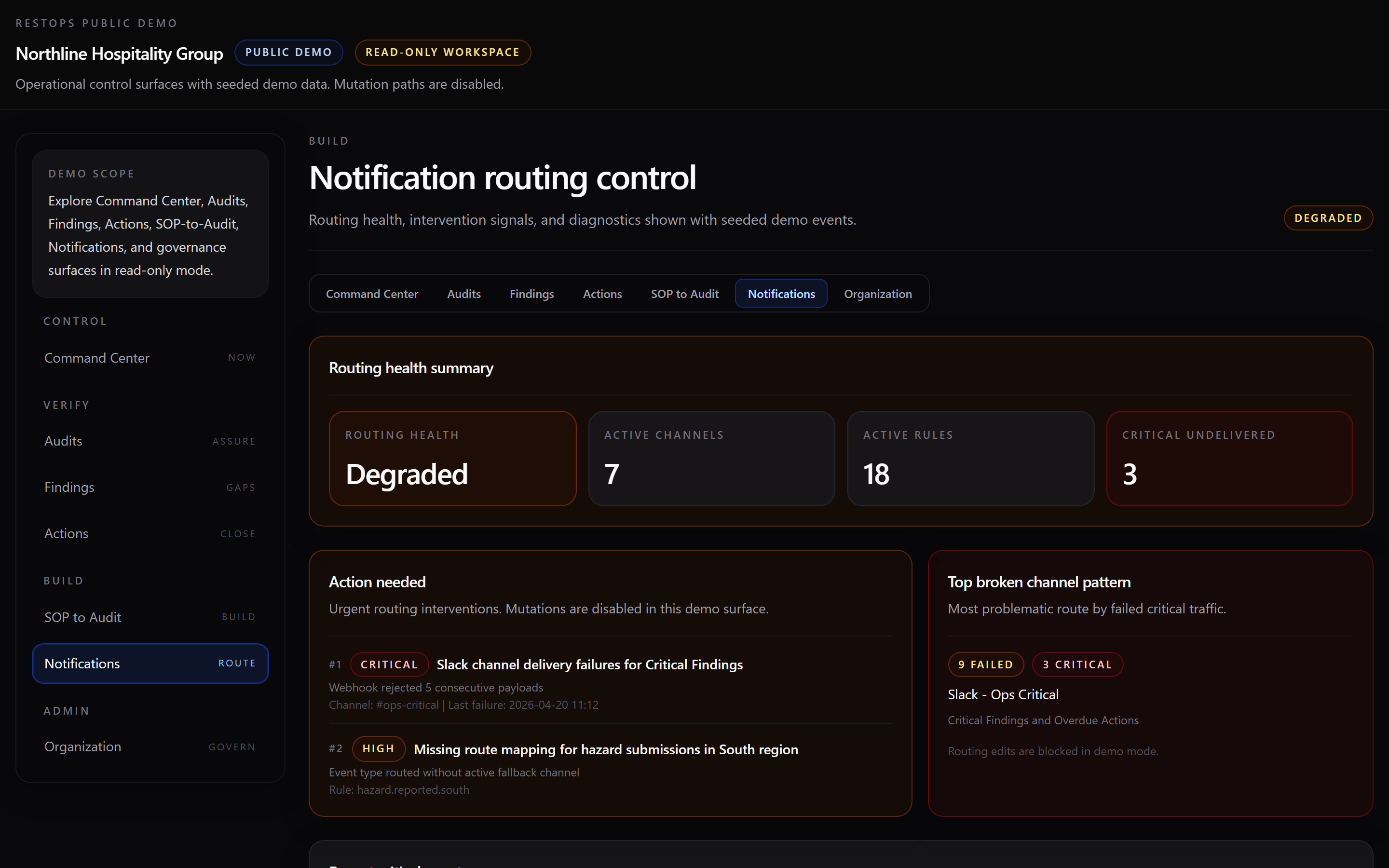
Notification Routing
Operational signals route to the right operator through governed channels. Routing health, channel state, and delivery diagnostics are separated into dedicated surfaces — not collapsed into one settings screen.
- Routing health summary with Intervention priority
- Channel state, Ownership, and delivery counts
- Delivery log with filterable outcomes and retries
Govern
Organization Control
Governance surface for role scope, invitation state, and Organization structure. Every operator sees exactly what they are accountable for — and nothing more.
- Role-scoped access model with explicit Site assignments
- User directory, invitation state, and membership governance
- Organization configuration, unit types, and accountability structure