Operational Workflows

Executable control loops with explicit decisions.

RestOps workflows are not static process descriptions. They are live system flows with status, Ownership, due discipline, and Intervention signals.

Workflow 01

Standards → Execution → Issues → Steering

Operational discipline is driven from Standards into execution windows. Unresolved gaps route into Issues and then into Steering Intervention visibility.
Execution flow
Standards
Controls defined by Organization and Site scope.
Execution windows
Opening, daily, closing with due-state tracking.
Gap detection
Overdue, blocked, or skipped items surface risk.
Issue routing
Operational gaps move into owned Issue handling.
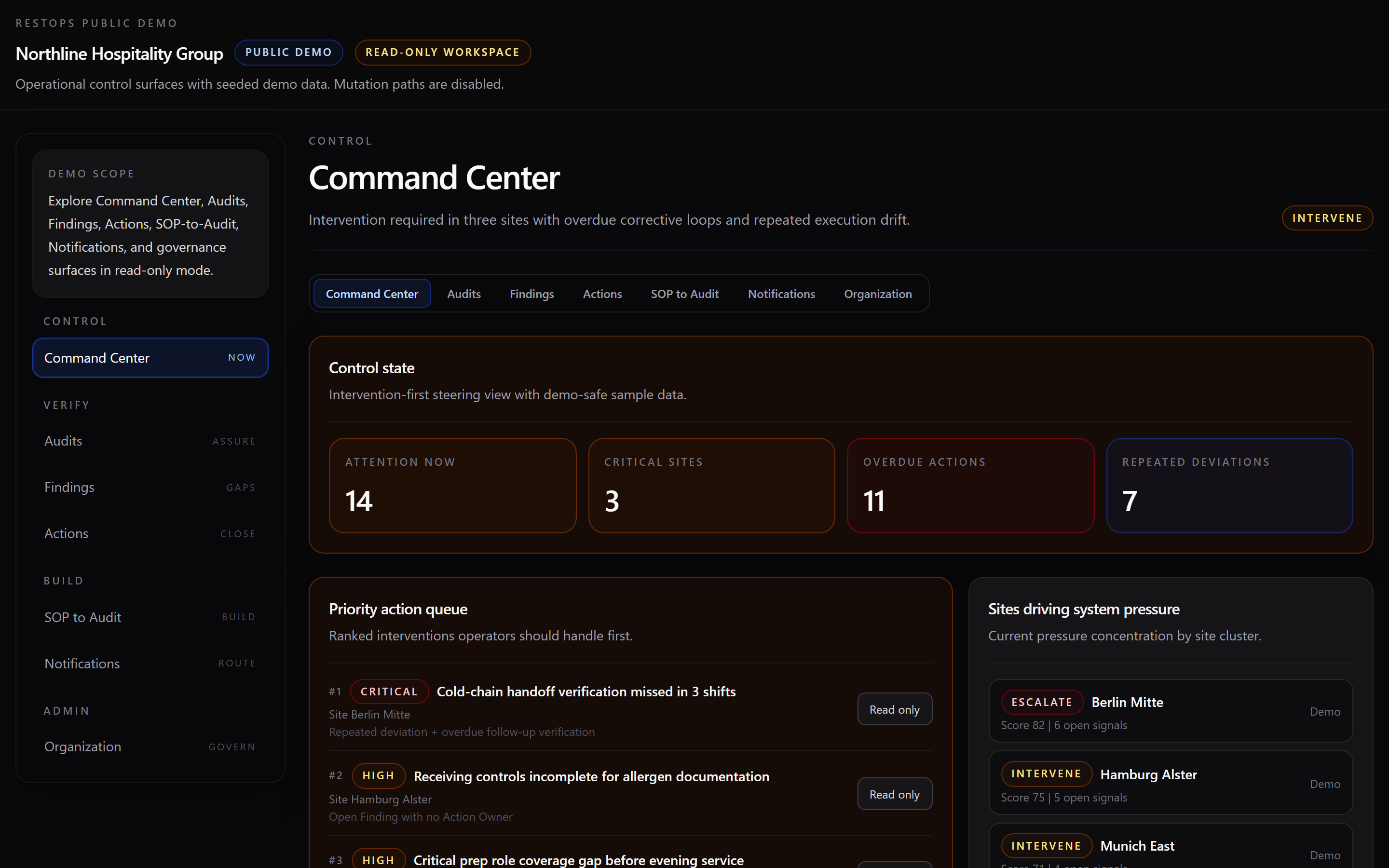
Command Center — execution pressure visible in Steering /demo/command-center
Command Center showing execution pressure routing into Steering

Workflow 02

Audit → Finding → Action → Verify → Close

Finding Detail and Issue Detail are treatment-led surfaces: choose path first, then execute handling and formal follow-up only when required.

Treatment path decision
Path A

Resolve directly

Use when no formal tracked follow-up is required. Focus on closure quality and status progression.

Path B

Continue triage

Keep triage active while Ownership, Evidence, or execution context is still maturing.

Path C

Formal Corrective Action

Escalate when tracked remediation Ownership and due discipline are required.
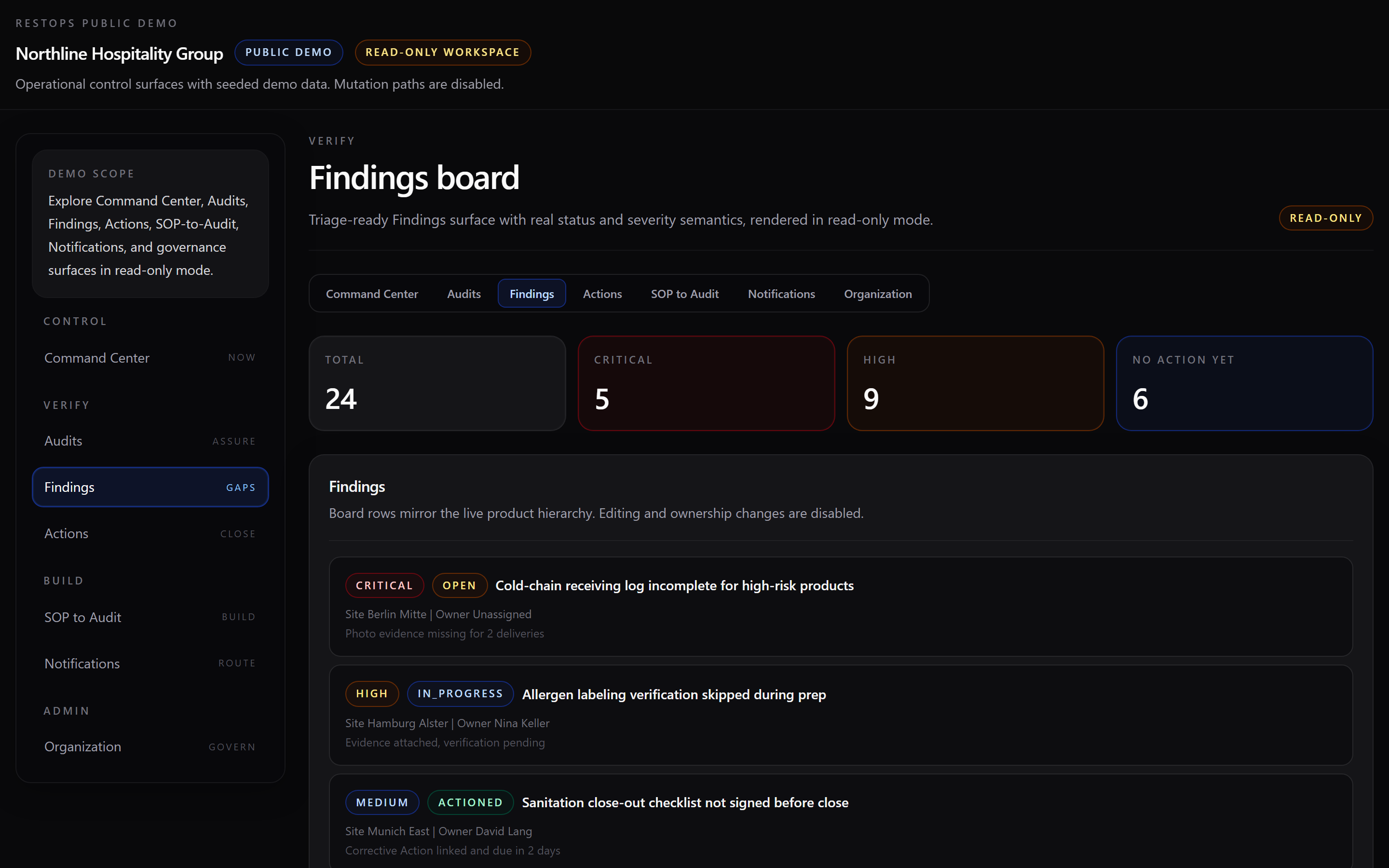
Findings — treatment path triage /demo/findings
Findings triage surface showing treatment paths

Workflow 03

SOP source → parse → draft review → publish template

SOP-to-Audit provides explicit source trust: parse states, control-point extraction, review gates, and publication into native audit templates.
SOP-to-Audit flow
Upload SOP
Scoped source document retained for traceability.
Parse runs
Status and errors visible in parse run history.
Draft review
Human review before controls become native.
Publish template
Approved draft becomes executable audit template.
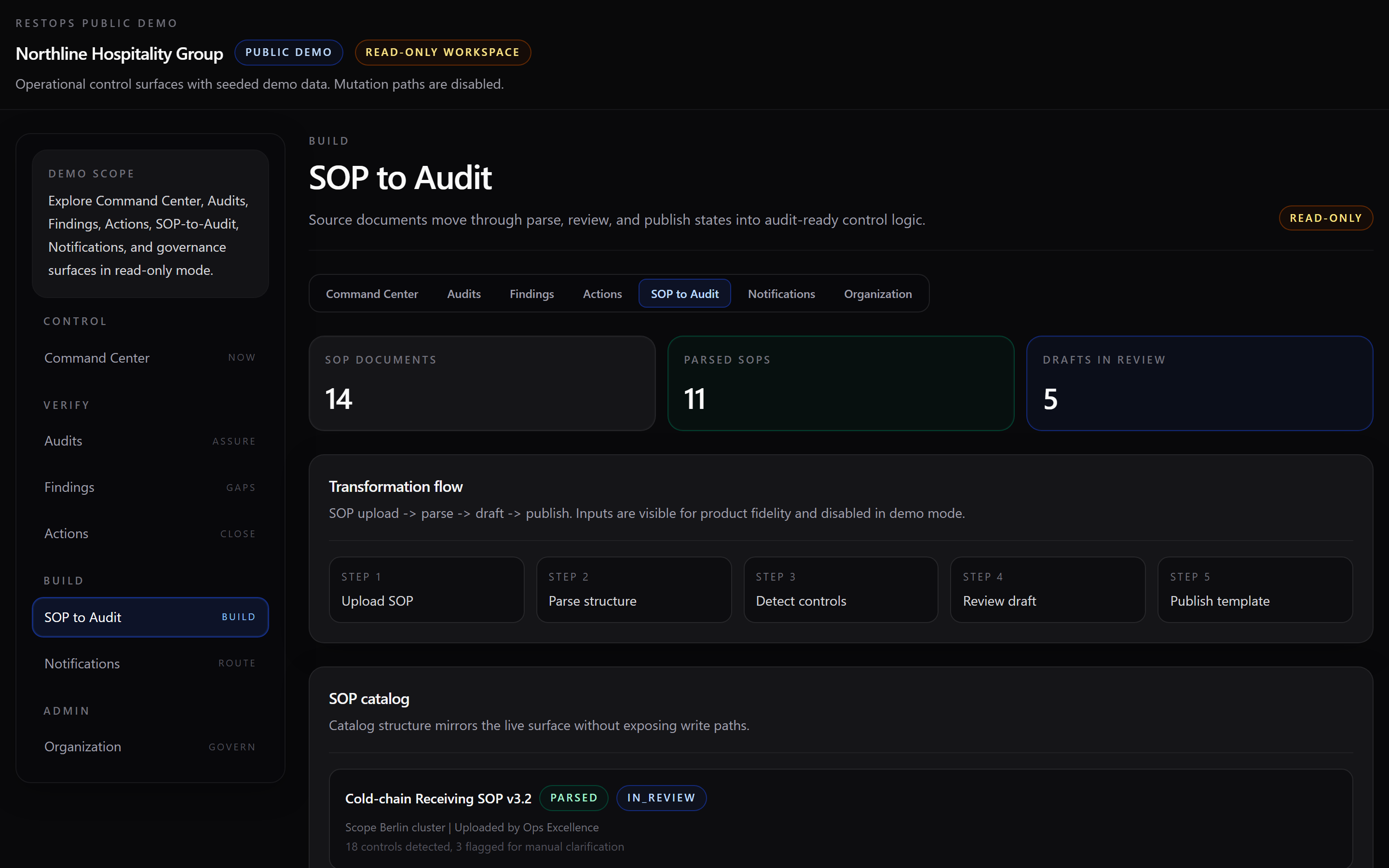
SOPs — source structure and audit linkage /demo/sops
SOP-to-Audit — source structure and audit linkage

Workflow 04

Capacity signals → Intervention routing → Follow-up

Workforce and coverage pressure routes into Intervention and follow-up through the same control loop used by execution and assurance.
Capacity control flow
Coverage requirements
Role-level minimum and recommended staffing.
Risk Signal generation
Understaffed and missing critical role detection.
Steering intake
Capacity signals contribute to Intervention priority.
Action follow-up
Owned remediation with due states and verification.
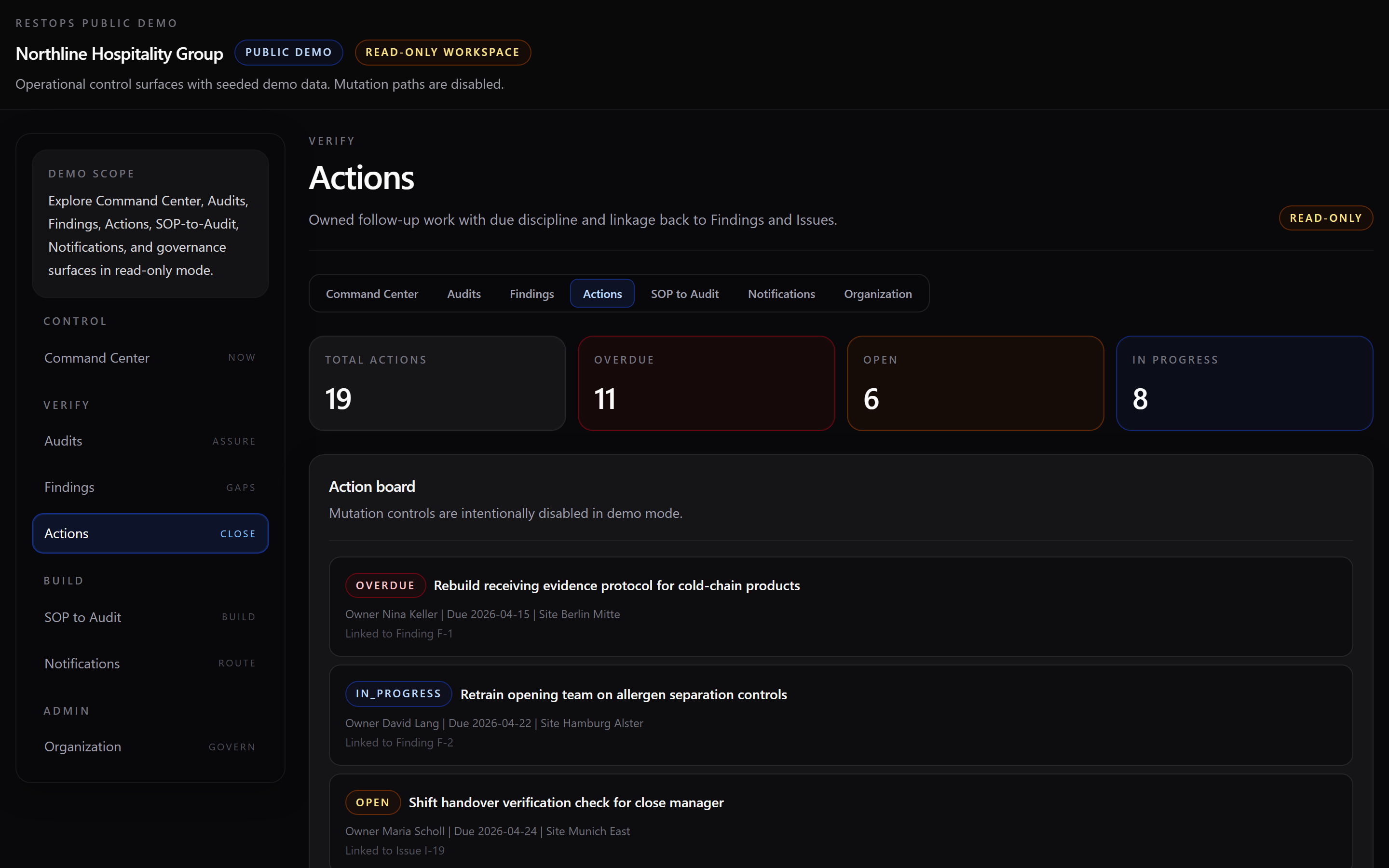
Corrective Actions — owned follow-up with due discipline /demo/actions
Corrective Actions — owned follow-up with due-state discipline